High Altitude Coffee
What is high-altitude coffee?
Great coffee starts in the soil. Altitude shapes the flavour in your cup long before it reaches Bold Street Coffee, but how, and why? High-altitude coffee usually refers to Arabica beans grown at elevations of 1,200 metres (approx. 4,000 feet) or higher.
In these climates, daytimes are warm, but at night the temperature drops. These massive shifts (also known as diurnal temperature variation) slow down the maturation cycle of the coffee cherry. Instead of ripening quickly in constant heat, the extended growth period allows the cherry to pump more complex sugars and nutrients into the seed (the bean).
With the right processing, high-elevation coffee becomes a dense, hard bean. In some producing countries, particularly in Central America, it’s graded as SHB (Strictly Hard Bean) or SHG (Strictly High Grown). If you’ve wondered why a brew tastes so clean and full of character, you might have been drinking high-altitude grown coffee.
Locations
We're always brewing good times nearby
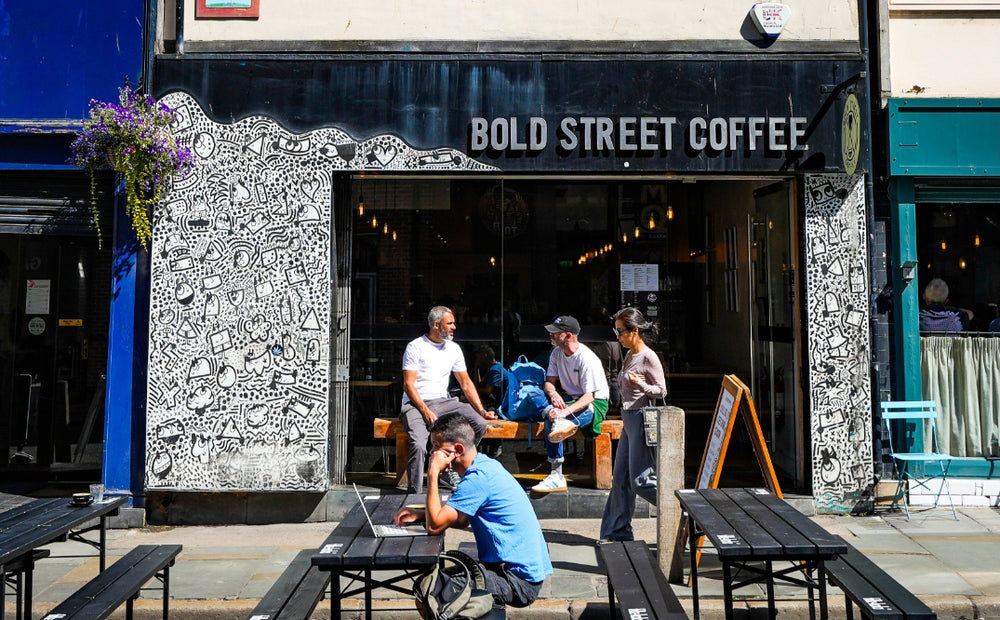
Bold Street, Liverpool
Bold Street Coffee,
89 Bold Street,
Liverpool, L1 4GD
Opening Hours:
Monday to Saturday: 8am – 6pm
Sunday: 9am – 5pm
In our original location, you can find Bold Street Coffee serving up signature breakfast dishes, sandwiches, and sweet treats, like doughnuts and pastries.
How to find us:
Head to St. Luke’s (locally known as the ‘Bombed-Out church’). You’ll find yourself at the bottom of Bold Street, where we’re just a couple of minutes walk up the road.
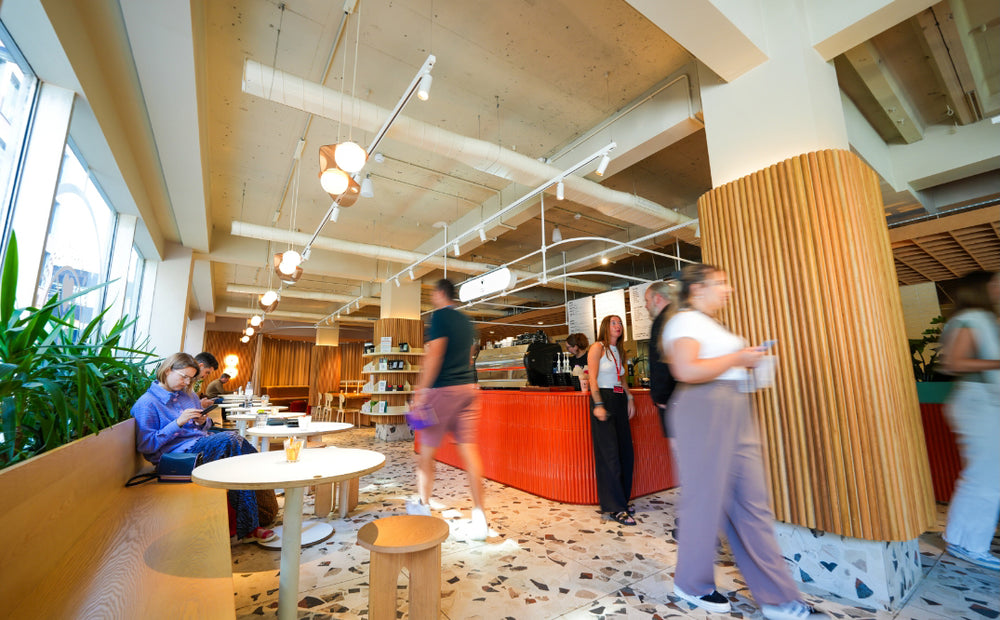
The Plaza, Liverpool
Bold Street Coffee, The Plaza,
100 Old Hall Street,
Liverpool, L3 4QJ
Opening Hours:
Monday to Friday: 7am – 6pm
Saturday and Sunday: 9am – 3pm
Fancy a full English breakfast in the heart of Liverpool’s business district? Our Plaza location brings the same quality coffee and breakfast options to professionals. We even offer a 20% discount to residents of The Plaza and Cotton Exchange!
How to find us:
Walk into The Plaza building on Old Hall Street, just a short trek from Moorfields Station.
Why do people love high-altitude coffee?
If you can’t get enough of BSC’s high-altitude coffee, here’s why.

Complexity
Coffee cherries mature slowly in cooler mountain air, and the beans have more time to develop complex sugars. The fruit builds sweetness and aromatic compounds, which, when roasted at Bold Street Coffee, result in concentrated, caramelised sugars.
You might pick up notes of citrus, berries, florals, caramel, cocoa, spice or stone fruit, depending on the region.
Dense and clear
High-elevation coffee has a tight cellular structure, meaning it can handle the application of heat much better than softer, low-altitude beans. For roasters, density matters because it affects how carefully the roast needs to be developed.
When roasted, these dense beans produce a cup with plenty of definition.
Bright acidity
The best high-altitude coffee has a bright, crisp acidity.
It’s what makes a cup taste lively, and depending on where it was grown, you might find flavour profiles that taste like orange, red apple, blackcurrant, lemon, tropical fruit or wine-like juiciness.
High-altitude origins tell a story
Did you know that the environment shapes flavour?
Altitude is part of a coffee’s terroir – the full set of conditions that make your brew taste so distinct. Mountain slopes, volcanic soils, cool nights, shade, rainfall and farming practices all influence the final cup.
That’s why two high-altitude grown coffees can taste completely different. You might try a chocolate-led, washed Colombian coffee one day, and a fruit-forward Ethiopian the next.
What countries grow coffee at high altitude?
The coffee belt is the tropical band around the equator: it’s home to mountainous regions, where some of our favourite coffees are grown. Each origin brings its own cup profile:
- Ethiopia: The ‘birthplace of coffee’, Ethiopian varietals are some of the most distinctive high-grown coffees in the world.
- Colombia: With the Andes mountains running through the country, Colombia produces coffee at altitudes up to 2,000 MASL (meters above sea level).
- Kenya: Kenyan lots are bright and juicy, grown on the high plateaus surrounding Mount Kenya.
- Guatemala and Costa Rica: Central America has volcanic soil at high elevations, perfect for growing citrus-laced profiles.
Why people love our Coffee
What makes high altitude coffee so distinctive? Grown in elevated mountain regions where cooler temperatures slow the ripening process, high altitude coffee develops a richer, more complex flavour profile. The extended growing time allows the beans to become denser, enhancing their natural sweetness and depth. At Bold Street Coffee, each batch is carefully selected to showcase these unique characteristics, delivering a vibrant, well-balanced cup with exceptional flavour and a smooth, satisfying finish.
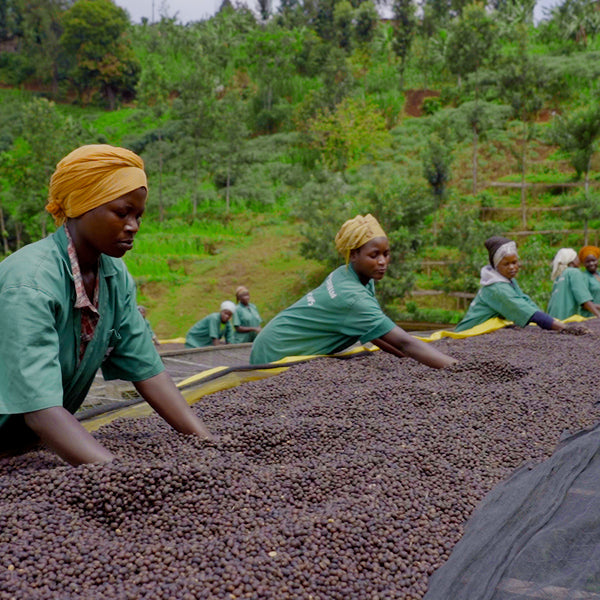
Carefully Selected Ingredients
Quality is at the core of everything we serve at Bold Street Coffee. From trusted suppliers to thoughtfully chosen produce, every ingredient is selected for its flavour and consistency. It’s this attention to detail that ensures every dish and drink lives up to the standard our customers expect.

Service with a Personal Touch
Great coffee is only part of what makes Bold Street Coffee special. Our team brings genuine enthusiasm to every interaction, combining knowledge of our speciality blends with a friendly, approachable style. It’s this personal touch that turns a simple coffee run into a welcoming experience.
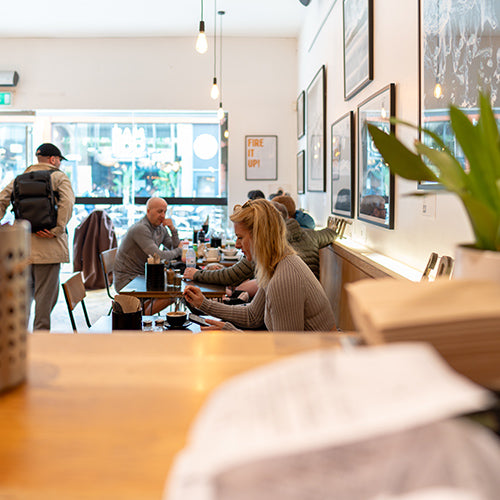
Comfort in Every Corner
There’s no better way to enjoy a coffee and a full English breakfast than in a relaxed, welcoming space. At Bold Street Coffee, our interior is designed with comfort in mind, giving you the perfect place to unwind, catch up or simply enjoy the moment over great food and coffee.
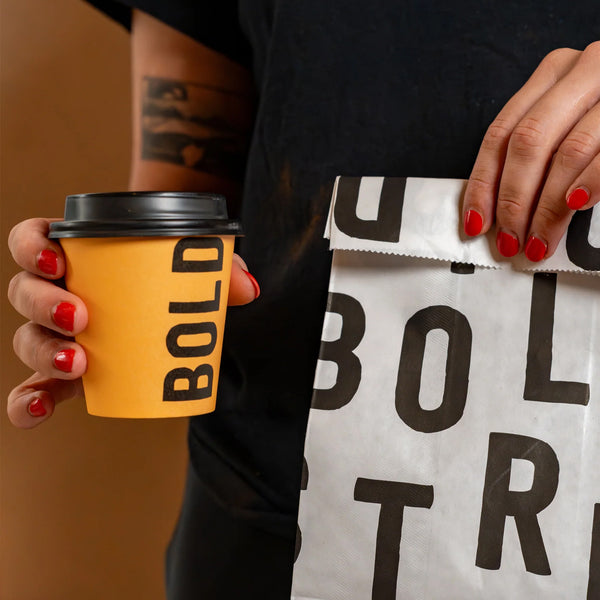
Trusted by Coffee Lovers
Our reputation is built on the people we serve. From first-time visitors to regulars, Bold Street Coffee has earned a loyal following over the years. It’s their feedback and shared experiences that reflect the quality, atmosphere and consistency we strive to deliver every day.
Ready to brew higher with BSC?
Eager to try high-altitude coffee? You don't need to climb a mountain: just come to Bold Street Coffee. With locations in Liverpool, Manchester and Glossop, you can experience speciality coffee with northern hospitality.
Sample one of our favourite Colombian coffees, El Jaragual, a lighter, filter roast with notes of chocolate milk, strawberry and pineapple. Or, for espresso drinkers, try La Leona from Concepcion Sur in Honduras. Experience the golden syrup sweetness. If you want the best of BSC delivered, our filter subscription brings seasonal filter-roast coffee straight to your doorstep.
FAQs
Is high-altitude coffee better?
Altitude doesn’t define quality. If high-altitude coffee tastes better to you, it’s just personal preference. ‘Better’ is subjective, and factors like processing and roasting play a big part, too.
How high is considered 'high altitude' for coffee?
Anything grown above 1,200 metres (about 4,000 feet) above sea level is considered high altitude.
What do SHB and SHG mean?
You might see these acronyms on coffee spec sheets.
SHB stands for Strictly Hard Bean, and SHG stands for Strictly High Grown. Both are grading terms used (mainly in Central America) to indicate that the coffee was grown at an altitude high enough to produce a very dense, high-quality bean.
Does high-altitude coffee have more caffeine?
Not necessarily. Caffeine content depends more on species, variety, dose, roast development, and brew method than on altitude alone.
What is the best way to brew high-altitude coffee?
Turns out, they love our coffee


